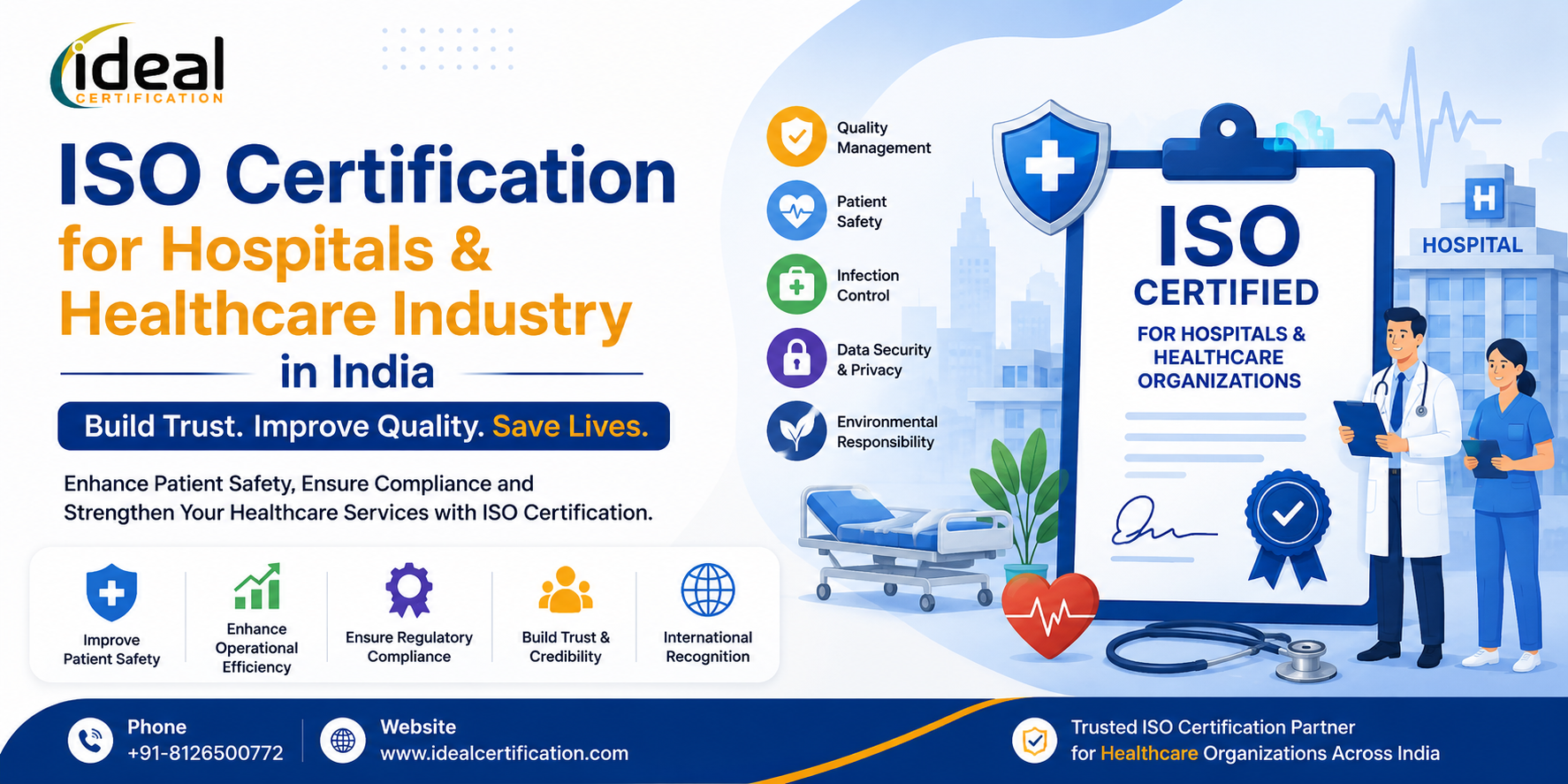
ISO Certification for Hospitals and Healthcare Industry in India
06 Jun 2026
Introduction
India's healthcare sector is growing at a rapid pace. Private hospitals, diagnostic labs, nursing homes, and speciality clinics are opening across the country. However, growth alone is not enough—patients today expect quality, safety, and trust. This is where ISO certification becomes a valuable asset for healthcare organizations.
If you operate a hospital, clinic, nursing home, diagnostic centre, or healthcare facility, ISO certification helps improve patient care, enhance credibility, and differentiate your organization from competitors.
This guide explains the applicable ISO standards, benefits, certification process, costs, and requirements for healthcare organizations in India.
What Is ISO Certification for Hospitals?
ISO (International Organization for Standardization) develops globally recognized standards that help organizations maintain quality, safety, consistency, and continual improvement.
When a hospital obtains ISO certification, it demonstrates that its processes have been independently audited and verified against internationally accepted standards. This certification is recognized by patients, regulators, insurance providers, and business partners worldwide.
For hospitals and healthcare institutions, ISO certification provides a structured framework to improve operational efficiency and healthcare service quality.
Which ISO Standards Apply to Hospitals and Healthcare Organizations?
ISO 9001:2015 – Quality Management System (QMS)
ISO 9001 is the most widely adopted quality standard worldwide. It helps healthcare facilities improve patient satisfaction, reduce operational errors, and standardize internal processes.
Suitable for:
- Hospitals
- Clinics
- Nursing homes
- Dental clinics
- AYUSH centres
- Diagnostic facilities
ISO 15189:2022 – Medical Laboratories
ISO 15189 focuses specifically on medical laboratories and ensures technical competence and reliability of test results.
Suitable for:
- Pathology laboratories
- Diagnostic centres
- Blood banks
- Biochemistry laboratories
ISO 13485:2016 – Medical Devices
This standard is designed for organizations involved in manufacturing, distributing, or servicing medical devices.
Suitable for:
- Medical device manufacturers
- Surgical equipment suppliers
- Biomedical engineering companies
ISO 45001:2018 – Occupational Health & Safety
ISO 45001 helps healthcare facilities protect employees from workplace hazards and maintain a safe working environment.
Suitable for:
- Hospitals
- Clinics
- Healthcare institutions with staff
ISO 14001:2015 – Environmental Management
Hospitals generate biomedical waste and consume significant resources. ISO 14001 supports responsible environmental management.
Suitable for:
- Hospitals
- Multi-specialty healthcare centres
- Facilities handling biomedical waste
ISO 27001:2022 – Information Security Management
ISO 27001 protects patient information and healthcare data from cyber threats and unauthorized access.
Suitable for:
- Hospitals with electronic health records
- Telemedicine providers
- Health-tech companies
NABH vs ISO Certification
| Feature | NABH | ISO Certification |
|---|---|---|
| Issued By | Quality Council of India (QCI) | Accredited ISO Certification Bodies |
| Recognition | National | International |
| Scope | Hospital-specific | Quality Management Standards |
| Cost | Higher | More Affordable |
| Timeline | 12–18 Months | 3–6 Months |
| Applicability | Large hospitals | All healthcare facilities |
Many healthcare organizations pursue both NABH and ISO certifications to achieve comprehensive quality recognition.
Benefits of ISO Certification for Hospitals
Improved Patient Safety
Standardized procedures reduce medical errors, infection risks, and operational inconsistencies.
Enhanced Operational Efficiency
Well-defined processes improve workflow management and reduce unnecessary costs.
Increased Credibility
ISO certification enhances trust among patients, healthcare professionals, insurers, and business partners.
Better Regulatory Compliance
Organizations can more easily comply with healthcare, environmental, and workplace safety regulations.
Competitive Advantage
ISO certification helps hospitals stand out in highly competitive healthcare markets.
International Recognition
Healthcare organizations serving international patients benefit from globally recognized quality standards.
Stronger Data Security
ISO 27001 helps protect patient records and healthcare information systems.
ISO Certification Process for Hospitals
Step 1: Gap Analysis
Assess current practices against ISO requirements.
Step 2: Documentation
Develop policies, procedures, SOPs, manuals, and records.
Step 3: Staff Training
Train employees on ISO requirements and quality procedures.
Step 4: Implementation
Implement documented processes across departments.
Step 5: Internal Audit
Verify compliance through internal assessments.
Step 6: Management Review
Evaluate system effectiveness and address gaps.
Step 7: Certification Audit
An accredited certification body conducts Stage 1 and Stage 2 audits.
Step 8: Certification Issuance
Successful organizations receive an ISO certificate valid for three years, subject to surveillance audits.
Typical Timeline: 3–6 months
Documents Required
Common documentation includes:
- Quality Policy and Objectives
- Organizational Structure
- Standard Operating Procedures (SOPs)
- Patient Rights Policy
- Infection Control Procedures
- Biomedical Waste Management Plan
- Staff Training Records
- Complaint Handling Records
- Equipment Maintenance Records
- Internal Audit Reports
- Corrective and Preventive Action Records (CAPA)
ISO Certification Cost for Hospitals in India
| Organization Type | Standard | Estimated Cost |
|---|---|---|
| Small Clinic / Nursing Home | ISO 9001 | ₹20,000 – ₹50,000 |
| Diagnostic Centre | ISO 15189 | ₹30,000 – ₹75,000 |
| Mid-size Hospital | ISO 9001 + ISO 45001 | ₹60,000 – ₹1,50,000 |
| Multi-specialty Hospital | Multiple Standards | ₹1,00,000 – ₹3,00,000 |
| Medical Device Company | ISO 13485 | ₹75,000 – ₹2,00,000 |
Actual costs vary based on facility size, scope, number of employees, and certification requirements.
Who Needs ISO Certification?
ISO certification is beneficial for:
- Government hospitals
- Private hospitals
- Multi-specialty hospitals
- Nursing homes
- Diagnostic centres
- Pathology laboratories
- Blood banks
- Dental clinics
- Eye care centres
- AYUSH clinics
- Rehabilitation centres
- Ambulance service providers
- Medical device companies
- Pharmaceutical organizations
- Telemedicine platforms
Frequently Asked Questions
Which ISO standard is best for hospitals?
ISO 9001:2015 is generally the recommended starting point for hospitals and healthcare facilities.
Is ISO certification mandatory for hospitals in India?
No. However, it is increasingly preferred for insurance empanelment, tenders, and quality assurance initiatives.
What is the difference between NABH and ISO?
NABH is a healthcare-specific accreditation in India, while ISO certification is internationally recognized and applicable across industries.
How long does ISO certification take?
Typically between 3 and 6 months, depending on organizational readiness.
Can small clinics obtain ISO certification?
Yes. ISO standards can be implemented by organizations of all sizes.
ISO certification has become an important tool for hospitals and healthcare facilities seeking to improve quality, patient safety, operational efficiency, and regulatory compliance.
Whether pursuing ISO 9001 for quality management, ISO 15189 for laboratories, ISO 13485 for medical devices, or ISO 27001 for information security, healthcare organizations can benefit significantly from adopting internationally recognized standards.
ISO certification demonstrates a commitment to excellence and helps healthcare providers build trust among patients, regulators, insurers, and stakeholders.