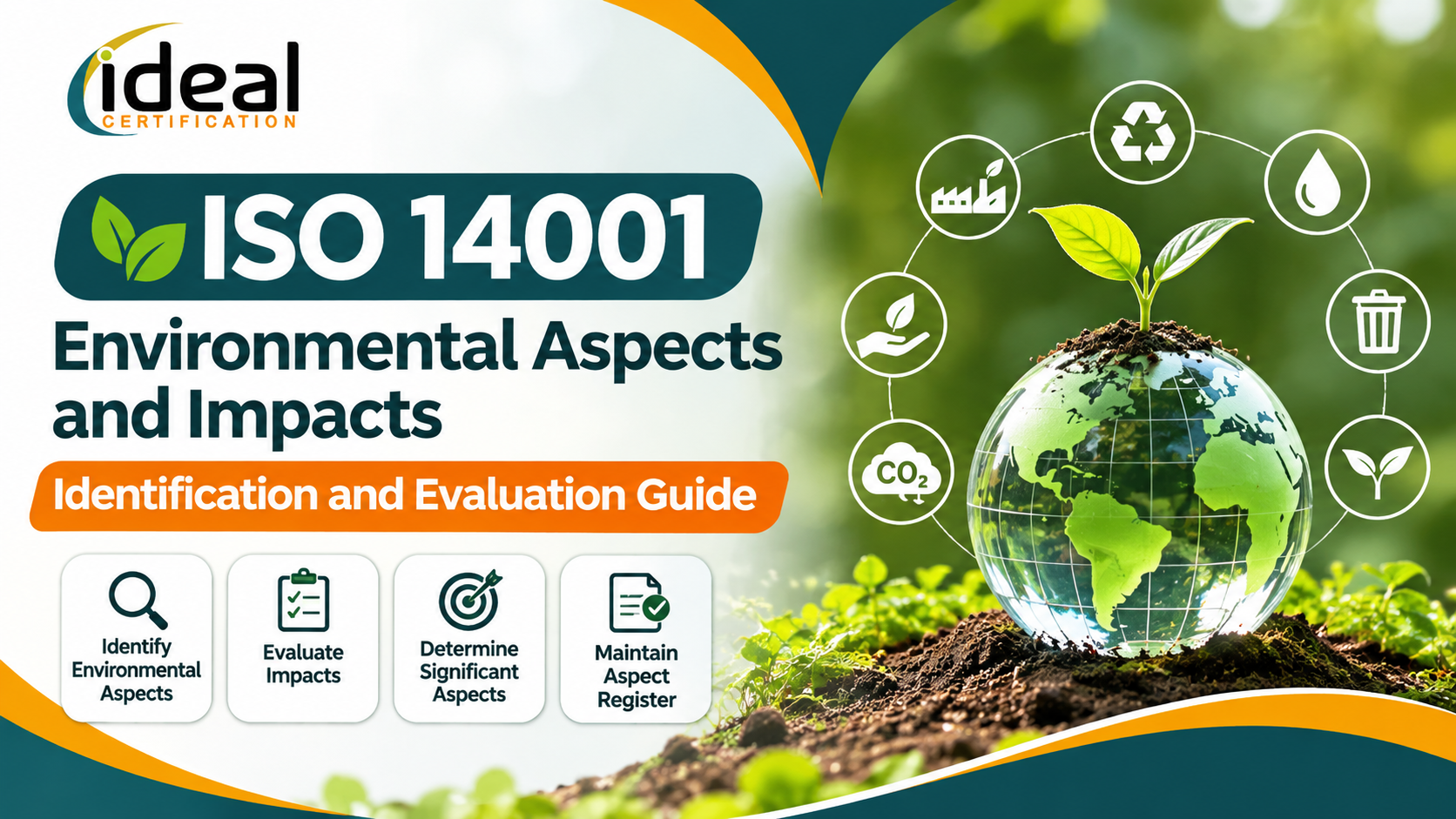
ISO 14001 Environmental Aspects and Impacts in India
10 Oct 2026
Environmental performance has become an important consideration for Indian businesses. Manufacturers must manage emissions and industrial waste, construction companies need to consider dust and resource consumption, and service organizations must address energy use, water consumption, and waste disposal.
However, environmental management is not simply about reducing waste or following environmental regulations. Businesses also need a systematic way to identify how their activities affect the environment and decide which issues require attention.
This is where ISO 14001 environmental aspects and impacts assessment becomes essential. It helps organizations understand their environmental interactions, evaluate potential consequences, establish appropriate controls, and improve environmental performance through a structured Environmental Management System (EMS).
For organizations preparing for ISO 14001 certification, this assessment is a practical foundation for environmental planning and ongoing improvement.
This guide explains how to identify environmental aspects, evaluate their impacts, determine significance, and prepare an environmental aspects register that supports your organization's EMS.
What Are Environmental Aspects and Impacts in ISO 14001?
Although the terms are closely related, an environmental aspect and an environmental impact have different meanings.
An environmental aspect is an element of an organization's activities, products, or services that interacts, or can interact, with the environment.
An environmental impact is a change to the environment resulting from an environmental aspect. It can be adverse or beneficial.
For example, electricity consumption is an environmental aspect, while the greenhouse gas emissions associated with electricity generation are a potential environmental impact.
Understanding this distinction helps organizations perform a more accurate environmental aspects and impacts assessment.
Environmental aspects and impacts examples
| Business activity | Environmental aspect | Potential environmental impact |
|---|---|---|
| Manufacturing | Energy consumption | Greenhouse gas emissions associated with energy generation |
| Production | Wastewater discharge | Water pollution |
| Warehousing | Packaging waste | Increased waste sent for disposal |
| Chemical handling | Chemical storage and transfer | Potential soil or groundwater contamination |
| Construction | Dust generation | Reduced local air quality |
| Transportation | Diesel consumption | Air emissions and greenhouse gas emissions |
| Office operations | Paper consumption | Resource use and waste generation |
| Equipment maintenance | Used oil and contaminated materials | Soil or water contamination if improperly managed |
| Cleaning operations | Water and chemical consumption | Resource depletion and potential wastewater pollution |
| Recycling activities | Recovery of reusable materials | Reduced demand for virgin resources |
These examples are illustrative. The actual environmental impacts depend on the organization's activities, operating conditions, location, and controls.
What Does ISO 14001 Require for Environmental Aspects?
ISO 14001 requires organizations to establish an environmental management system that helps them manage environmental responsibilities, meet applicable compliance obligations, and achieve environmental objectives.
A central part of this work is identifying the environmental aspects of activities, products, and services that the organization can control or influence, using a lifecycle perspective.
The organization must determine which aspects are significant using established criteria. The assessment should reflect its operations, environmental context, relevant obligations, and potential consequences.
Important update: ISO 14001:2026
ISO 14001:2026 was published on 15 April 2026 and replaced ISO 14001:2015 as the current edition. The updated standard retains the established environmental management framework while clarifying requirements and strengthening alignment with environmental priorities such as climate change, biodiversity, and resource efficiency. Official ISO source
Organizations already certified to the previous edition should consult their certification body regarding applicable transition arrangements. Businesses preparing a new EMS should verify the edition and requirements applicable to their certification plans.
The fundamental objective remains practical: identify environmental interactions, evaluate their significance, and use the results to guide controls and improvement.
How to Identify Environmental Aspects and Impacts
A reliable environmental aspect identification process begins with an understanding of the organization's actual operations.
Step 1: Identify activities, products, and services
Prepare a list of the organization's main processes, including routine operations and supporting activities.
Consider:
- Purchasing and storing raw materials
- Production and packaging
- Energy and water consumption
- Equipment operation and maintenance
- Transportation and distribution
- Waste collection and disposal
- Cleaning and chemical handling
- Outsourced activities that may affect environmental performance
For a manufacturing business, this may involve examining each production stage. For a service organization, office operations, vehicle use, data centre energy consumption, and waste management may be more relevant.
Step 2: Identify environmental aspects
For every activity, identify how it interacts with the environment.
Ask the following questions:
- Does the activity consume energy, water, fuel, or raw materials?
- Does it generate waste, wastewater, dust, or emissions?
- Can it cause noise, vibration, or chemical releases?
- Could an equipment failure or spill affect the surrounding environment?
- Can the organization influence suppliers, contractors, transportation, or disposal practices?
Record relevant aspects in a consistent format. Avoid copying a generic register without checking whether each aspect applies to your business.
Step 3: Determine potential environmental impacts
Identify the environmental changes associated with each aspect.
For example:
- Excessive water consumption may increase pressure on local water resources.
- Improper hazardous waste handling may contaminate soil or groundwater.
- Fuel combustion may contribute to air pollution and greenhouse gas emissions.
- Inefficient material use may increase waste and resource demand.
Also consider beneficial impacts, such as reduced energy consumption, water reuse, material recovery, and waste prevention.
Step 4: Assess different operating conditions
Environmental aspects should not be assessed only during normal production.
Review three broad conditions:
- Normal conditions: Routine production, office work, or service delivery.
- Abnormal conditions: Maintenance, equipment breakdowns, or unusual operating situations.
- Emergency situations: Reasonably foreseeable incidents such as chemical spills, fires, or fuel leaks.
This approach helps organizations identify risks that may not appear in routine operating records.
Step 5: Consider the lifecycle perspective
An environmental aspect may arise outside the organization's immediate premises. Consider relevant lifecycle stages such as raw material acquisition, product design, manufacturing, packaging, transportation, product use, and end-of-life treatment.
For example, a manufacturer may reduce packaging waste by redesigning product packaging or working with suppliers to use reusable materials.
The extent of the assessment should reflect the organization's ability to control or influence relevant activities. A full lifecycle assessment is not automatically required for every product.
How to Evaluate Significant Environmental Aspects
After identifying environmental aspects and impacts, the organization needs to determine which aspects are significant.
ISO 14001 does not prescribe one universal numerical scoring formula for every organization. Instead, organizations should establish suitable criteria and apply them consistently.
Common evaluation criteria include:
- Severity of the potential environmental impact
- Frequency or likelihood of occurrence
- Scale and duration of the impact
- Applicable environmental compliance obligations
- Potential consequences of an emergency
- Concerns of relevant interested parties
- Effectiveness of existing controls
Example of an environmental aspect scoring matrix
An organization may use a documented scoring method to compare aspects and establish priorities.
For example, it might rate severity and likelihood from 1 to 5 and multiply the scores.
| Environmental aspect | Severity | Likelihood | Illustrative score |
|---|---|---|---|
| Routine paper waste | 2 | 3 | 6 |
| High water consumption | 4 | 4 | 16 |
| Potential chemical spill | 5 | 3 | 15 |
| Minor packaging waste | 2 | 2 | 4 |
These figures are illustrative, not ISO-mandated thresholds. The organization must define its own scoring rules and significance criteria. Legal and other compliance obligations must be addressed appropriately, regardless of a numerical score.
Significant aspects should inform environmental objectives, operational controls, monitoring, emergency preparedness, and improvement plans.
How to Prepare an ISO 14001 Environmental Aspects Register
An environmental aspects register provides documented information about relevant activities, their environmental aspects and impacts, and the results of significance evaluation.
A practical register may include:
- Department or process
- Activity, product, or service
- Environmental aspect
- Potential environmental impact
- Operating condition
- Relevant compliance obligations
- Evaluation criteria and scores, where used
- Significance determination
- Existing controls
- Required actions and improvement opportunities
- Responsible person
- Review date
The register should reflect actual operations and connect to the organization's environmental objectives and controls.
Review it when significant changes occur, such as introducing new equipment, changing production processes, handling new chemicals, expanding facilities, or responding to an environmental incident. Establish a review schedule appropriate to the organization's activities and risks.
Common Mistakes Businesses Should Avoid
An environmental aspects register is useful only when it supports real environmental management.
Avoid these common mistakes:
- Confusing an environmental aspect with its impact
- Ignoring maintenance, transportation, or outsourced activities
- Overlooking abnormal conditions and foreseeable emergencies
- Using unclear significance criteria
- Failing to consider applicable compliance obligations
- Copying a template without assessing actual operations
- Not updating the register after process changes
- Identifying significant aspects without assigning controls or responsibilities
Regular review, clear ownership, and evidence-based evaluation help maintain a more effective EMS.
Frequently Asked Questions
1. What are environmental aspects and impacts in ISO 14001?
Environmental aspects are elements of activities, products, or services that interact with the environment. Environmental impacts are the resulting environmental changes. For example, wastewater discharge is an aspect, while water pollution is a potential impact.
2. How do you identify significant environmental aspects under ISO 14001?
Identify relevant activities, determine their environmental aspects and impacts, and evaluate them using documented criteria. Consider severity, likelihood, applicable compliance obligations, operating conditions, and foreseeable emergencies.
3. What should an ISO 14001 environmental aspects register contain?
It typically records activities, environmental aspects, potential impacts, operating conditions, evaluation criteria, significance results, existing controls, and required actions. The exact format depends on the organization's operations and needs.
4. What are examples of environmental aspects in manufacturing?
Common examples include energy and water consumption, fuel use, wastewater discharge, chemical handling, hazardous waste generation, packaging waste, and air emissions. Their impacts depend on the process and how effectively it is controlled.
5. How often should an environmental aspects register be reviewed?
Organizations should establish a suitable review process and update the register when relevant changes, incidents, or other circumstances affect environmental aspects. Review frequency should reflect operational risks and the organization's EMS arrangements.
Conclusion: Strengthen Your Environmental Management System
A well-prepared environmental aspects and impacts assessment helps businesses understand their environmental responsibilities, identify significant aspects, prioritize controls, and improve environmental performance.
For Indian organizations seeking ISO 14001 certification, the priority should be a practical assessment based on actual activities, consistent evaluation criteria, reliable documentation, and ongoing review.
If your organization needs support with environmental management system implementation, documentation, or certification preparation, Ideal Certification can help you understand the requirements and plan the next steps.
Contact Ideal Certification
Discuss your ISO 14001 requirements with our team.
- Email: info@idealcertification.com
- Phone: +91-8126500772
- Address: Ground Floor, Shop No.11, EL - Commercia, PR 7 Road, Near Maya Garden City, Gate No.3, Zirakpur, Punjab - 140603
- Website: https://idealcertification.com/
Contact Ideal Certification to discuss your organization's environmental management objectives and certification requirements.